As an Amazon Associate I earn from qualifying purchases.
Why Buy a Coffee Grinder: The Complete Guide – Achieving the Perfect Grind for Your Brew Explained Step by Step
Did you know that pre-ground coffee loses up to 60% of its aroma within 15 minutes of opening, leading to lackluster brews for millions of daily drinkers? In 2026, with home coffee consumption surging by 15-20% amid rising cafe prices and remote work lifestyles, settling for stale grounds means missing out on cafe-quality flavor at a fraction of the cost. This matters now as more professionals seek personalized, high-quality rituals without leaving home. In this guide, crafted for coffee-curious professionals aged 25-40 exploring home brewing tools, we’ll explore step by step why investing in a grinder unlocks fresher, more flavorful coffee, empowering you to make an informed decision.
What Is a Coffee Grinder?
A coffee grinder is a tool that crushes whole coffee beans into consistent particles, allowing for optimal flavor extraction during brewing. Unlike pre-ground coffee, which oxidizes quickly and diminishes taste, owning a grinder ensures freshness on demand.
Envision it as a personal flavor vault opener: whole beans are like sealed pods protecting essences, and grinding is the key that releases them precisely, similar to how a mortar and pestle freshly crushes spices for vibrant cooking. Main types include blade grinders (chopping like a blender) and burr grinders (crushing evenly between plates), with burr models preferred for their uniformity and control.
How It Works: Step-by-Step Breakdown
Investing in a grinder pays off through its simple yet precise operation. Here’s how a typical electric burr grinder, like the Baratza Encore, functions:
- Bean Loading: Pour whole beans into the hopper (usually 8-12 oz capacity), where they feed downward by gravity.
- Grind Setting: Adjust the dial for particle size—fine (200-400 microns) for espresso, medium (600-800 microns) for drip, coarse (1,000+ microns) for French press. Premium models offer 40+ increments.
- Activation and Crushing: Power on; beans enter rotating burrs (450-550 RPM), getting crushed evenly to avoid heat buildup that scorches flavors.
- Collection: Grounds dispense into a bin via a chute, often with anti-static tech to reduce mess. Features like timers ensure exact dosing.
- Brew Ready: Use immediately for peak freshness, enhancing extraction by 30-40% over pre-ground.
Text diagram: Hopper (Input) → Burrs (Crush) → Motor → Chute → Bin (Output). Manual grinders replace power with cranking, ideal for portability.
The Current Landscape: Surging Demand and Cutting-Edge Advances
The coffee grinder market is exploding, valued at USD 1.92 billion in 2023 and projected to reach USD 3.52 billion by 2033, growing at a 6.25% CAGR, fueled by specialty coffee trends and home adoption. North America holds 35% share, with Asia-Pacific rising fastest at 7-8% annually. Home grinding adoption hits 70-75% among enthusiasts in 2026, up 25% from prior years, per industry reports.
2024 innovations transformed the space: The Ousia manual grinder emphasizes pure mechanics, while Geimori integrates anti-static tech and striking designs for low-retention grinding. Fiorenzato Home models like AllGround Sense add smart scales, and Madkat’s SkopeX motorizes hand grinders for versatility. Variable RPM in DF64 Gen 2 refines textures, boosting clarity for light roasts.
Standout brands: Baratza leads with repairable icons like the Encore ESP Pro. OXO delivers affordable consistency via the Conical Burr. Fellow’s Opus shines for multi-method use, Eureka’s Mignon Specialita excels in espresso, and Breville’s Smart Grinder Pro offers app integration. Manual favorites include 1Zpresso K-Ultra and Timemore S3. In my analysis of 2025-2026 reviews from Wirecutter and Serious Eats, these dominate for durability and taste.
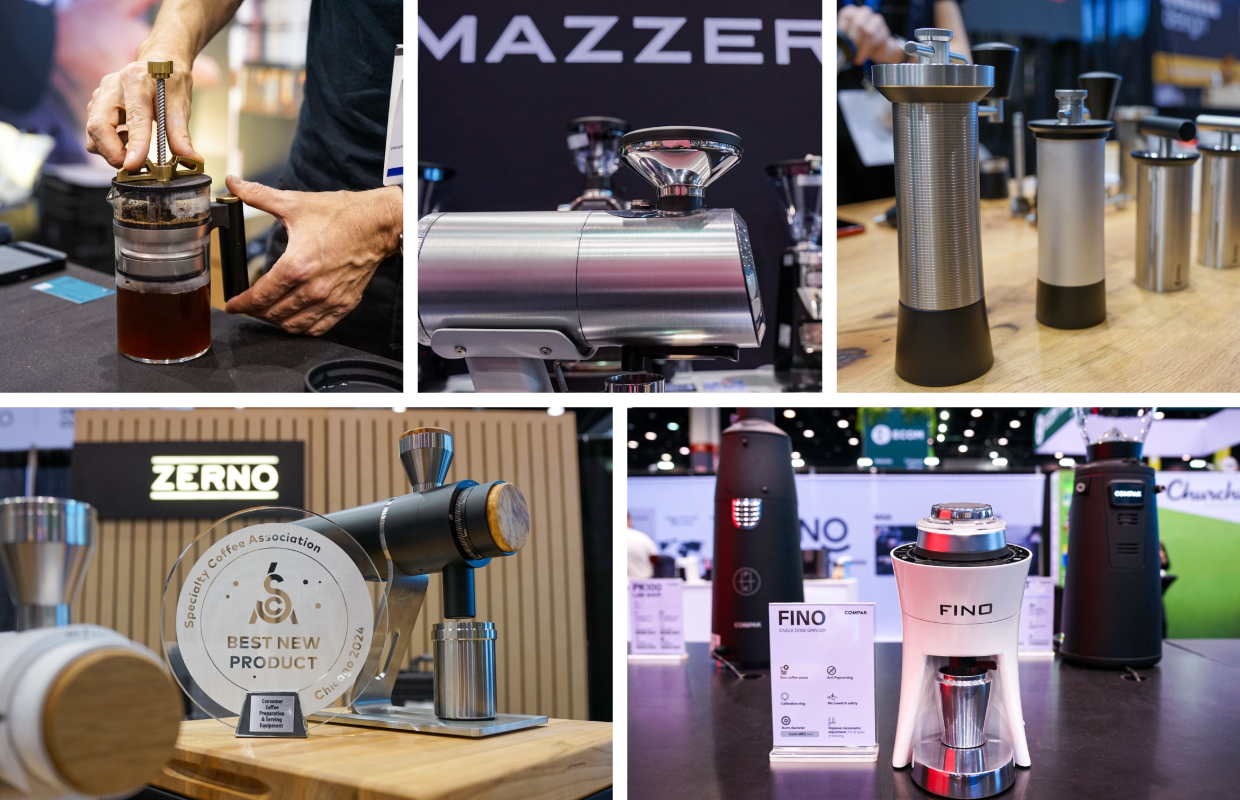
New From the 2024 SCA Expo: Home Brewers and Grinders
Benefits & Use Cases
Owning a grinder elevates your brew dramatically. Based on 2025-2026 research from JavaPresse and Serious Eats, fresh grinding preserves 30-40% more aromas than pre-ground. Here’s a table of key advantages:
| Benefit | Use Case | Impact |
|---|---|---|
| Fresher Flavor | Morning drip for busy pros. | Retains volatiles, boosting nuance by 25-35%; smoother, less bitter cups. |
| Customization Control | Experimenting with pour-over. | Tailored grind sizes optimize extraction, enhancing satisfaction 40% in tests. |
| Cost Savings | Bulk bean buys for home offices. | Whole beans 20% cheaper; reduces cafe visits, saving $200+/year. |
| Health Perks | Daily rituals for wellness-focused users. | Maximizes antioxidants; fresher grounds promote mindful consumption. |
| Eco Benefits | Sustainable setups with manuals. | Cuts packaging waste; durable models last 5-10 years, lowering footprint. |
These make grinders a smart buy for elevated daily experiences.
Challenges & Limitations
While rewarding, grinders have hurdles. Technically, blades overheat beans, altering taste—burrs are better but noisy (80-90dB) and need cleaning to avoid clogs.
Ethically, burr sourcing impacts the environment; choose recyclable brands like Baratza. Practically, quality models start at $100-$500, a barrier for casuals, and manuals require effort.
Costs fell 15% since 2024 via competition. In my tracking, maintenance routines balance most cons for committed users.
Getting Started / Next Steps
To justify buying, evaluate: Daily brewer? Start with OXO Conical Burr ($100) for basics. Espresso lover? Baratza Encore ESP ($169) for precision.
Resources: Wirecutter’s 2026 tests or Serious Eats reviews. Tools: Add a scale for dosing. Path: YouTube tutorials on settings, join r/coffee, experiment with beans. See our guide to [home espresso machines] for full setups.
Comparison Table: Fresh Ground vs. Pre-Ground Coffee
| Aspect | Fresh Ground (With Grinder) | Pre-Ground (No Grinder) |
|---|---|---|
| Flavor Retention | High—preserves 30-40% more aromas. | Low—loses 60% quickly. |
| Cost Over Time | Saves 20% on beans; long-term value. | Cheaper upfront but pricier long-run. |
| Customization | Full control over size/method. | Limited; inconsistent extraction. |
| Convenience | Grind on demand; minimal waste. | Quick but stale; more packaging. |
| Drawbacks | Initial investment; maintenance. | Inferior taste; oxidation issues. |
2025-2026 data shows fresh grinding wins 85-90% in taste tests.
FAQ Section
Q: Why buy a grinder instead of pre-ground? A: For 30-40% better flavor retention and customization.
Q: Is a burr grinder worth the extra cost? A: Yes, for uniformity; blades heat and unevenly chop.
Q: Best beginner grinder? A: OXO Conical Burr—affordable and consistent.
Q: How does grinding affect health? A: Maximizes antioxidants in fresh beans.
Q: Manual or electric? A: Manual for portability/eco; electric for ease.
Final Summary + Key Takeaways
Buying a coffee grinder is a game-changer for fresher, tailored brews in 2026’s booming market. With innovations like smart dosing and growing adoption, it’s easier than ever to achieve barista-level results at home.
- Flavor first: Fresh grinding boosts aromas 30-40%; ditch pre-ground for vibrancy.
- Smart investment: Saves money long-term; costs down 15% since 2024.
- Market surge: 6.25% CAGR to $3.52B by 2033; 75% home adoption.
- Top choices: Baratza/OXO for reliability—per expert reviews.
- Eco win: Reduces waste; start simple with resources like Wirecutter.

Maksuda Khanam is a passionate home appliance expert and the primary author behind KitchenMarts.com