As an Amazon Associate I earn from qualifying purchases.
What Is the Best Commercial Toaster?
What Is the Best Commercial Toaster? The best commercial toaster for most high-volume operations is the Hatco Toast King Conveyor Toaster, delivering up to 1,000 slices per hour with robust stainless steel construction, adjustable speed controls, and energy-saving idle modes that reduce power by 50-75%.
Types of Commercial Toasters
Commercial toasters are essential for restaurants, cafes, and hotels handling high volumes of bread, bagels, and buns. They come in three primary types, each suited to specific needs based on output and item variety.
Pop-Up Toasters
Pop-up commercial toasters feature spring-loaded slots that eject toasted items automatically. Ideal for low to medium-volume settings like small diners or buffets, they handle 60-380 slices per hour.
- Pros: Affordable, compact (typically under 13″ wide), and energy-efficient for lighter use.
- Cons: Limited capacity per batch; heating elements may wear out faster in heavy-duty scenarios.
- Key Stats: Light-duty models produce 60 slices/hour, while heavy-duty reach 380. Slots accommodate up to 1.5″ thick items like Texas toast.
Popular for front-of-house self-serve areas, these toasters use 120V power and include browning dials for precision. For in-depth reviews on models like the Waring WCT708, check out WebstaurantStore’s guide.
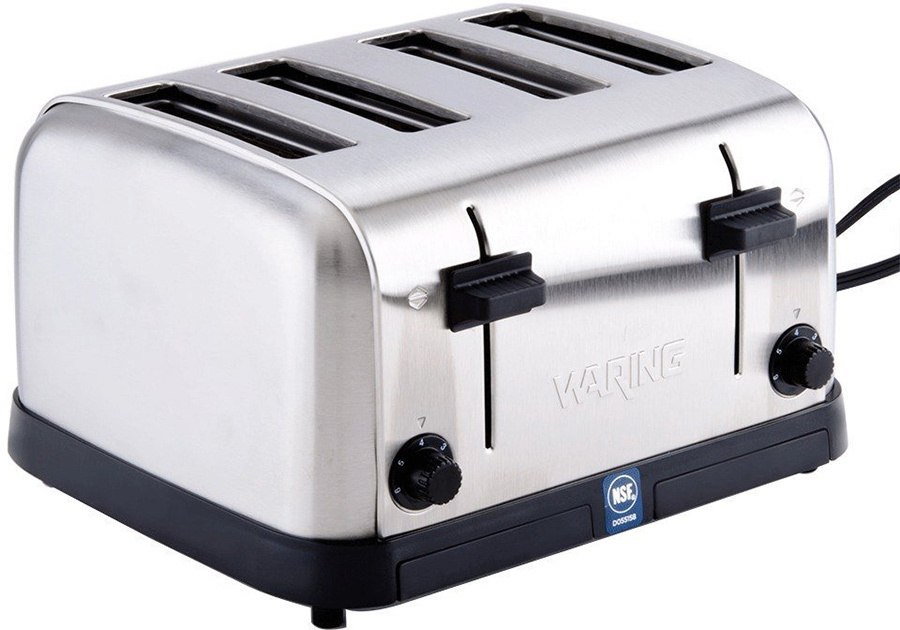
Waring WCT708, 1,800 Watt Commercial Pop-Up Toaster, 4 Slice
Conveyor Toasters
Commercial conveyor toasters use a belt system to toast items continuously, making them perfect for busy kitchens in hotels or cafeterias needing 200-2,400 slices per hour.
- Pros: High output, versatile for bread and bagels, with independent top/bottom heat controls.
- Cons: Higher energy use (up to 30-minute warm-up); larger footprint (15-24″ wide).
- Key Stats: Models like the Star QCS1-350 toast 350 slices/hour, while advanced units hit 2,000+. Energy efficiency improves with quartz elements and power-saving modes.
These toasters excel in fast-paced environments, with market demand rising 6.1% in North America due to efficiency gains. Explore more on Hatco models at Hatco’s official site.
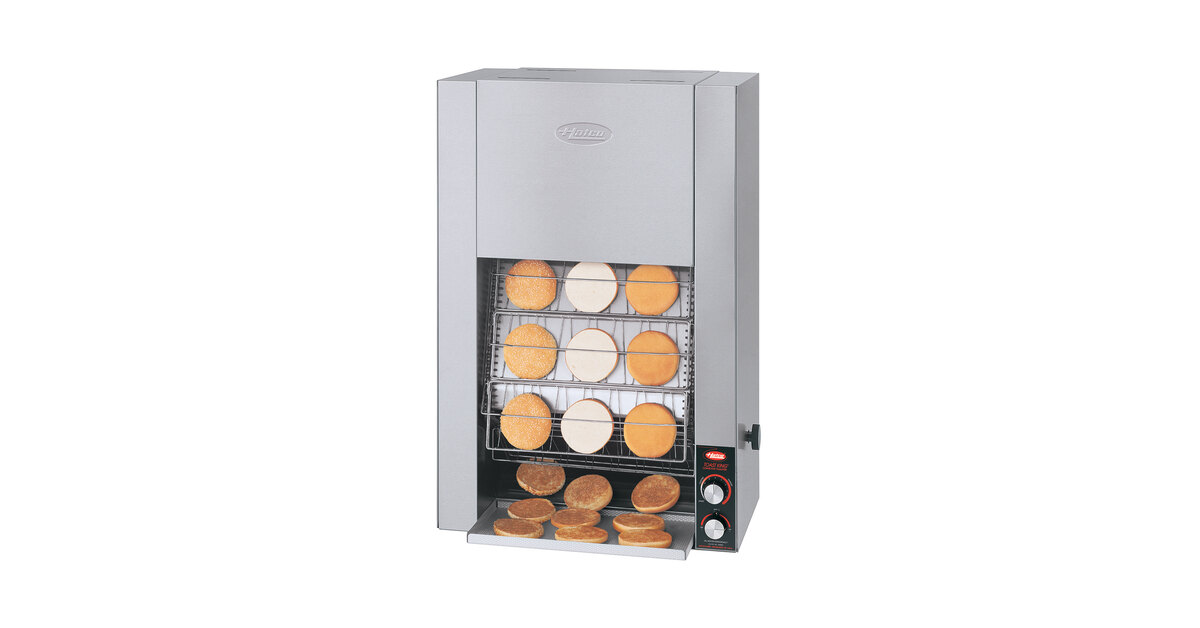
Hatco TK-155B Toast King Vertical Conveyor 3-Part Bun Toaster – 240V
Bun Grilling Toasters
Bun grilling or contact toasters caramelize buns and sandwiches via heated plates or rollers, suited for burger joints producing 550-1,600 slices per hour.
- Pros: Fast toasting (15-55 seconds); prevents sogginess in sauced items.
- Cons: More maintenance due to moving parts; not ideal for plain bread.
- Key Stats: Vertical designs save space, with capacities up to 1,600 halves/hour for models like Vollrath VCT4.
Best for specialty items, these units often require 208/240V and Teflon sheets for non-stick operation. For buying tips, visit Culinary Depot’s blog.
Vollrath VCT4-240 Vertical Contact Bun Toaster – 1400 Halves per …
Key Features to Consider When Buying a Commercial Toaster
Selecting the best commercial toaster involves balancing capacity, efficiency, and durability. The global toaster market is projected to grow from $5.2 billion in 2025 to $7.9 billion by 2035 at a 4.3% CAGR, driven by demand for energy-efficient models.
Capacity and Output
Match toaster capacity to your busiest 15 minutes, not average volume. Pop-ups suit 60-380 slices/hour for small ops, while conveyors handle 2,000+ for peaks.
| Type | Capacity (Slices/Hour) | Best For |
|---|---|---|
| Pop-Up | 60-380 | Low-volume cafes |
| Conveyor | 200-2,400 | High-traffic hotels |
| Bun Grilling | 550-1,600 | Burger shops |
Energy Efficiency
Commercial toasters account for part of the 25% electric energy used by cooking equipment in restaurants. Opt for models with idle modes saving 50-75% power. Pop-ups are most efficient for intermittent use, consuming less than high-output conveyors.
Durability and Maintenance
Stainless steel construction resists rust; removable crumb trays ease cleaning. Heavy-duty models like Hatco endure daily use, with users reporting 20+ years of service in commercial settings. Avoid water immersion—wipe daily and brush crevices.
Top Commercial Toaster Recommendations
Based on 2025 reviews, here are standout models from brands like Hatco, Star, and Waring, rated for performance and value.
Best Pop-Up Toaster: Waring WCT708
This 4-slice model toasts evenly for 6+ hours daily, with 1.5″ slots for bagels. Rated 4.5 stars; $200-300 range. “Works well in our small cafe,” notes a reviewer.
Best Conveyor Toaster: Hatco Toast King TK-100
Handles 960 slices/hour; adjustable for one-sided toasting. High ratings for speed; $1,500-2,000. Ideal for restaurants.
Best Bun Grilling Toaster: Vollrath VCT4
Toasts 1,400 halves/hour; durable with thermostatic controls. User-favorite for burgers; $1,000-1,500.
For comparisons, see SilverChef’s buyer’s guide.
FAQ
What is the difference between pop-up and conveyor commercial toasters? Pop-ups are compact and energy-efficient for lower volumes (60-380 slices/hour), while conveyors offer continuous high output (200-2,400 slices/hour) but use more space and power.
How much energy do commercial toasters consume? They vary; idle modes save 50-75%, and pop-ups are best for efficiency in low-use scenarios.
What capacity should I choose for a busy cafe? Aim for 300-1,000 slices/hour; assess peak demand to avoid bottlenecks.
Are commercial toasters worth the investment? Yes, with the market growing to $4.8 billion by 2033, durable models reduce downtime and improve service speed.
Final Thoughts
Prioritize capacity, efficiency, and type when selecting a commercial toaster to match your operation’s needs. Brands like Hatco and Waring lead with reliable, high-output options that enhance kitchen workflow and customer satisfaction.

Maksuda Khanam is a passionate home appliance expert and the primary author behind KitchenMarts.com