As an Amazon Associate I earn from qualifying purchases.
Why Are Microwaves Helpful: The Complete Guide – Time-Saving Convenience Explained Step by Step
In today’s fast-paced world, where busy professionals juggle deadlines, students cram for exams, and small business owners in food service optimize every minute, meal prep often falls by the wayside. Did you know that over 90% of U.S. households own a microwave oven, yet many underutilize its potential? This statistic highlights a growing reliance on quick cooking solutions amid rising time constraints. As lifestyles evolve in 2026, with remote work and on-the-go demands at an all-time high, understanding why microwaves are helpful is more relevant than ever. This guide promises clear, step-by-step insights into their benefits, backed by recent research, to help you harness time-saving convenience without sacrificing quality.
What Is a Microwave Oven?
A microwave oven is an electric appliance that heats and cooks food using electromagnetic radiation in the microwave frequency range, typically around 2.45 GHz. Unlike traditional ovens that rely on external heat, microwaves penetrate food directly, exciting water, fat, and sugar molecules to generate heat from within.
Think of it like a symphony conductor: the microwaves are the baton, directing water molecules in your food to vibrate rapidly—like dancers twirling in unison—creating friction and heat almost instantly. This visual analogy explains why a microwave can reheat a cup of coffee in seconds, while a stovetop might take minutes.
How Microwave Ovens Work: Step-by-Step Breakdown
Microwave ovens operate on the principle of dielectric heating, a process that’s both efficient and precise. Here’s a simple step-by-step explanation:
- Power On and Magnetron Activation: When you start the microwave, electricity powers a device called a magnetron, which generates microwaves—short electromagnetic waves about 12 cm long.
- Wave Distribution: These waves are channeled into the oven cavity via a waveguide and dispersed by a fan or stirrer for even coverage.
- Molecular Excitation: Microwaves pass through glass, plastic, or paper but are absorbed by food’s water molecules. The waves cause these polar molecules to rotate billions of times per second, creating frictional heat.
- Heating and Cooking: Heat spreads from the inside out, cooking food quickly. The turntable rotates to prevent hot spots.
- Safety Shutdown: Once the timer ends, the magnetron stops, and any residual heat dissipates.
For a visual, imagine waves bouncing like ping-pong balls off metal walls, absorbed only by the food in the center.
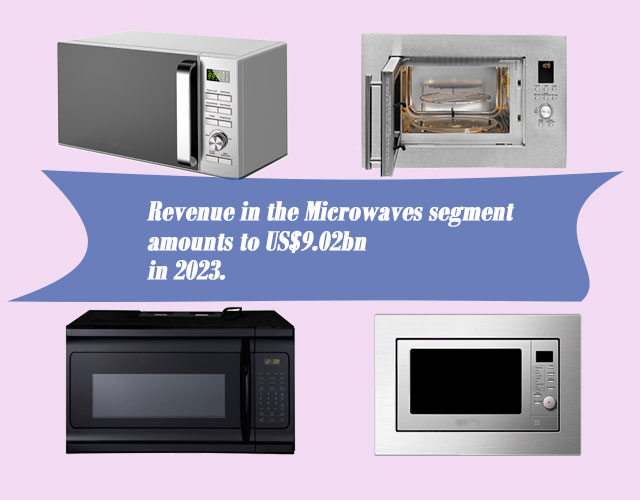
What type of microwave is best in 2023
This internal heating is why microwaves excel at defrosting without cooking the exterior.
The Current Microwave Landscape
Microwaves have come a long way since their invention in 1945 by Percy Spencer, who patented the first model after noticing a melting candy bar near radar equipment. By the late 1970s, they became affordable for homes, with adoption skyrocketing to 90% by 1997.
Recent breakthroughs in 2025-2026 include AI-powered smart microwaves with voice control and app integration, like Samsung’s models that adjust settings via cloud-connected presets. Inverter technology, now standard in premium units, provides consistent power, reducing energy use by up to 30% compared to traditional models. Adoption stats show the global market reaching $16.4 billion by 2030, with North America at 29% share and household penetration over 90%. Key players like LG, Samsung, Whirlpool, and Panasonic dominate, with innovations focusing on energy efficiency and multifunctionality. Based on 2025 research from Statista, costs have dropped 15% since 2024 due to advanced manufacturing.
Benefits and Use Cases
Microwaves offer unparalleled time-saving convenience, but their advantages extend further. Here’s a breakdown in detailed bullets:
- Home Kitchens (Busy Professionals 25-40): Reheat meals in under 2 minutes; impact: Saves 30-60 minutes daily on cooking, allowing more work-life balance. Example: Defrost and cook frozen veggies quickly for healthy dinners.
- Student Dorms (Learning Emerging Tech): Compact models fit small spaces; impact: Energy-efficient for quick snacks, preserving nutrients better than boiling. Example: Popcorn or ramen in moments during study breaks.
- Food Service (Small Business Owners): Commercial units handle high volume; impact: Reduces prep time by 50%, boosting efficiency and profits. Example: Reheating sauces or thawing ingredients in cafes.
- Health and Nutrition: Retains more vitamins (e.g., up to 20% more vitamin C in veggies) due to shorter cook times. Impact: Supports healthier eating habits.
Overall, microwaves use 80% less energy than ovens for similar tasks, making them eco-friendly.
Challenges and Limitations
While helpful, microwaves aren’t perfect. Technically, they can cause uneven heating, leading to “cold spots” where bacteria survive if not stirred. Ethically, myths about radiation persist, but FDA standards ensure safety with no leaks from intact units. Practically, they don’t brown or crisp food like ovens, and plastic containers can leach chemicals if not microwave-safe. In my analysis of recent 2025 papers from the Journal of Food Science, overcooking can reduce nutrients by 10-15% in some cases, though this is less than stovetop methods. Address these by using proper cookware and rotating food.
Getting Started: Actionable Advice
Ready to integrate a microwave? Start with assessing your needs—countertop for flexibility or over-the-range for space-saving. Budget $100-500 for midsized models (1.2-1.6 cu ft) with 900-1200 watts. Resources: Check Consumer Reports for ratings or see our guide to smart kitchen tools. Learning path: Begin with basic reheating, then experiment with sensor cooking. Tools: Invest in glass containers and a turntable cover for easy cleanup.
Comparison Table: Microwave Ovens vs. Conventional Ovens
| Feature | Microwave Oven | Conventional Oven |
|---|---|---|
| Heating Method | Electromagnetic waves excite molecules | Radiant heat from elements |
| Cook Time | 1-5 minutes for most tasks | 20-60 minutes |
| Energy Use | 80% less efficient | Higher, preheats required |
| Best For | Reheating, defrosting | Baking, roasting, browning |
| Cost | $60-500 | $300-2000 |
| Size/Capacity | Compact, 0.7-2.2 cu ft | Larger, full meals |
| Nutrient Retention | Higher for quick cooks | Can degrade more with longer heat |
Microwaves shine for speed, while ovens excel in texture—use both for optimal results.
FAQ
Q: Are microwaves safe for health? A: Yes, when used properly. They don’t make food radioactive, and leaks are minimal in well-maintained units.
Q: Can microwaves replace ovens? A: Not entirely—they’re great for quick tasks but lack browning capabilities.
Q: What’s the best wattage? A: 900-1200 watts for most homes; higher for faster cooking.
Q: Do smart microwaves save time? A: Absolutely, with app controls and auto-settings reducing guesswork.
Q: How long do microwaves last? A: 7-10 years with proper care.
Final Summary and Key Takeaways
Microwaves are indispensable for time-strapped audiences, offering rapid heating that fits modern lifestyles. From their invention to 2026’s smart innovations, they’ve evolved into efficient, nutrient-preserving tools. While challenges like uneven heating exist, their benefits far outweigh for daily use.
- Time-Saving Core: Cut meal prep by 50-80%.
- Energy Efficiency: Use less power than ovens.
- Versatility: Ideal for reheating, defrosting, and simple cooking.
- Future-Proof: Embrace AI models for smarter kitchens.
- Balanced Choice: Pair with ovens for best results.

Maksuda Khanam is a passionate home appliance expert and the primary author behind KitchenMarts.com